


Some error occured while loading the Quick View. Please close the Quick View and try reloading the page.
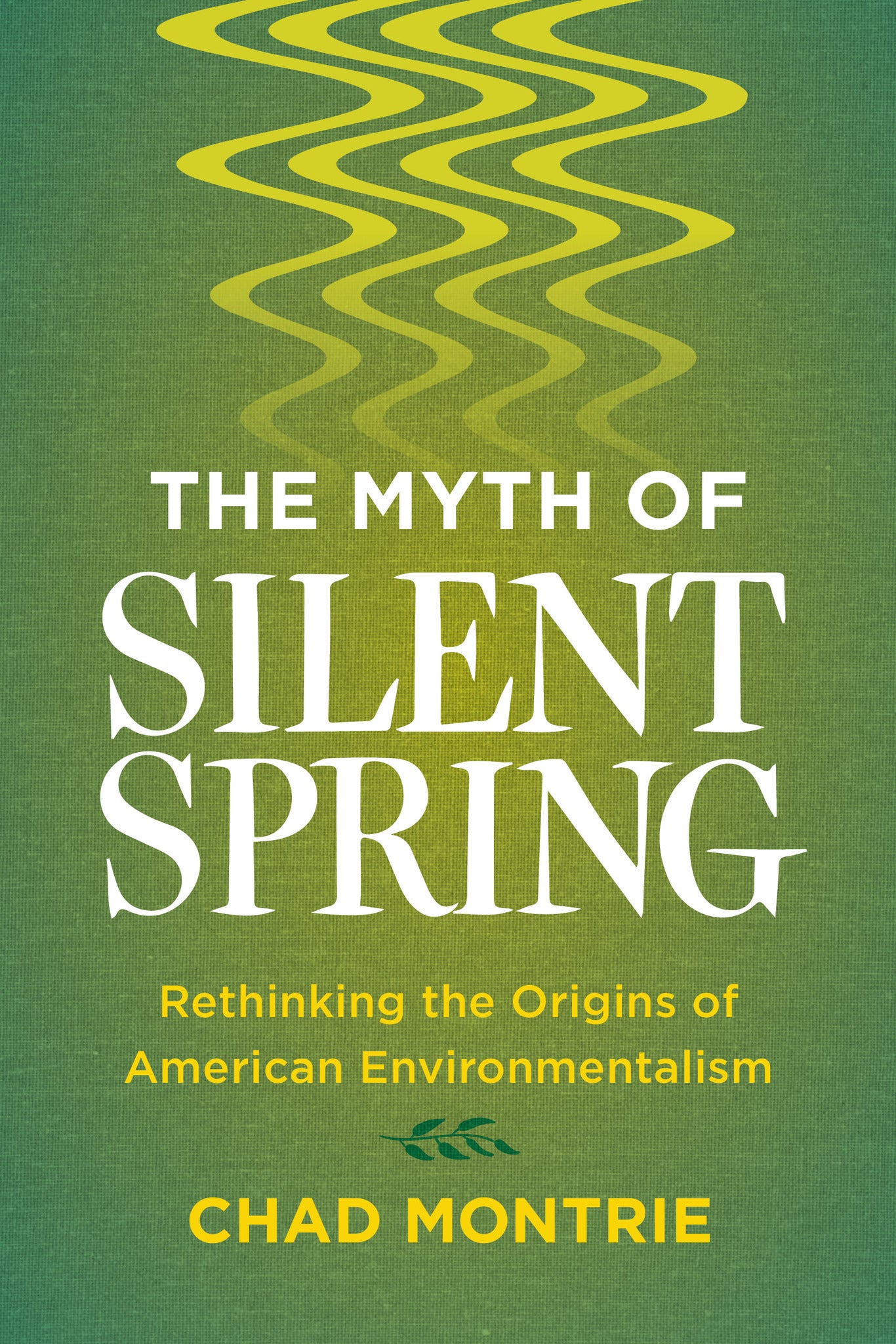
Since its publication in 1962, Rachel Carson’s book Silent Spring has often been celebrated as the catalyst that sparked an American environmental movement. Yet environmental consciousness and environmental protest in some regions of the United States date back to the nineteenth century, with the advent of industrial manufacturing and the consequent growth of cities. As these changes transformed people's lives, ordinary Americans came to recognize the connections between economic exploitation, social inequality, and environmental problems. As the modern age dawned, they turned to labor unions, sportsmen’s clubs, racial and ethnic organizations, and community groups to respond to such threats accordingly. The Myth of Silent Spring tells this story. By challenging the canonical “songbirds and suburbs” interpretation associated with Carson and her work, the book gives readers a more accurate sense of the past and better prepares them for thinking and acting in the present.

Price: $24.95
Pages: 200
Publisher: University of California Press
Imprint: University of California Press
Publication Date:
26 January 2018
Trim Size: 8.25 X 5.50 in
ISBN: 9780520291348
Format: Paperback
BISACs:
“Chad Montrie's book restores complexity to the history of American environmentalist movements and does justice to the actions against the degradation of nature that have been forgotten by the historiography, too focused on the heroic story (or history) of a white and bourgeois (or middle-class) scientist. The risk of such a thesis would be to minimize the diagnosis and the action of Rachel Carson, but Chad Montrie recognizes at the same time her courage, her pugnacity and her determination. It is less a matter of denying her impact—recognized by the historiography—than of recalling the competing imaginaries and actions that have also worked for the protection of the environment, in a long history that precedes Rachel Carson, to show that the environment is not necessarily opposed to use (or utilization), and to introduce a social analysis to a trajectory of degradation (or alteration) of the environment that is not a process involving humanity as a whole.”
Chad Montrie is Professor of History at the University of Massachusetts Lowell. He is the author of several books, including A People’s History of Environmentalism in the United States.
Acknowledgments
Introduction: “The Fight for a Balanced Environment and the Fight for Social Justice and Dignity Are Not Unrelated Struggles”
1. “I Think Less of the Factory Than of My Native Dell”
2. “Why Don’t They Dump the Garbage on the Bully-Vards?”
3. “Massive Mobilization for a Great Citizen Crusade”
Conclusion: “They Keep Threatening Us with the Loss of Our Jobs”
Notes
Further Reading
Index
Introduction: “The Fight for a Balanced Environment and the Fight for Social Justice and Dignity Are Not Unrelated Struggles”
1. “I Think Less of the Factory Than of My Native Dell”
2. “Why Don’t They Dump the Garbage on the Bully-Vards?”
3. “Massive Mobilization for a Great Citizen Crusade”
Conclusion: “They Keep Threatening Us with the Loss of Our Jobs”
Notes
Further Reading
Index